by erika haveman
I find myself reading more about the events of World War 2 and the Holocaust more than any other pieces of written work (it certainly rivals my Bible reading, anyways). As a result, my recent trip to Europe included visiting the concentration camps of Dachau in Germany and Auschwitz in Poland, as well as the transit camp Westerbork in the Netherlands.
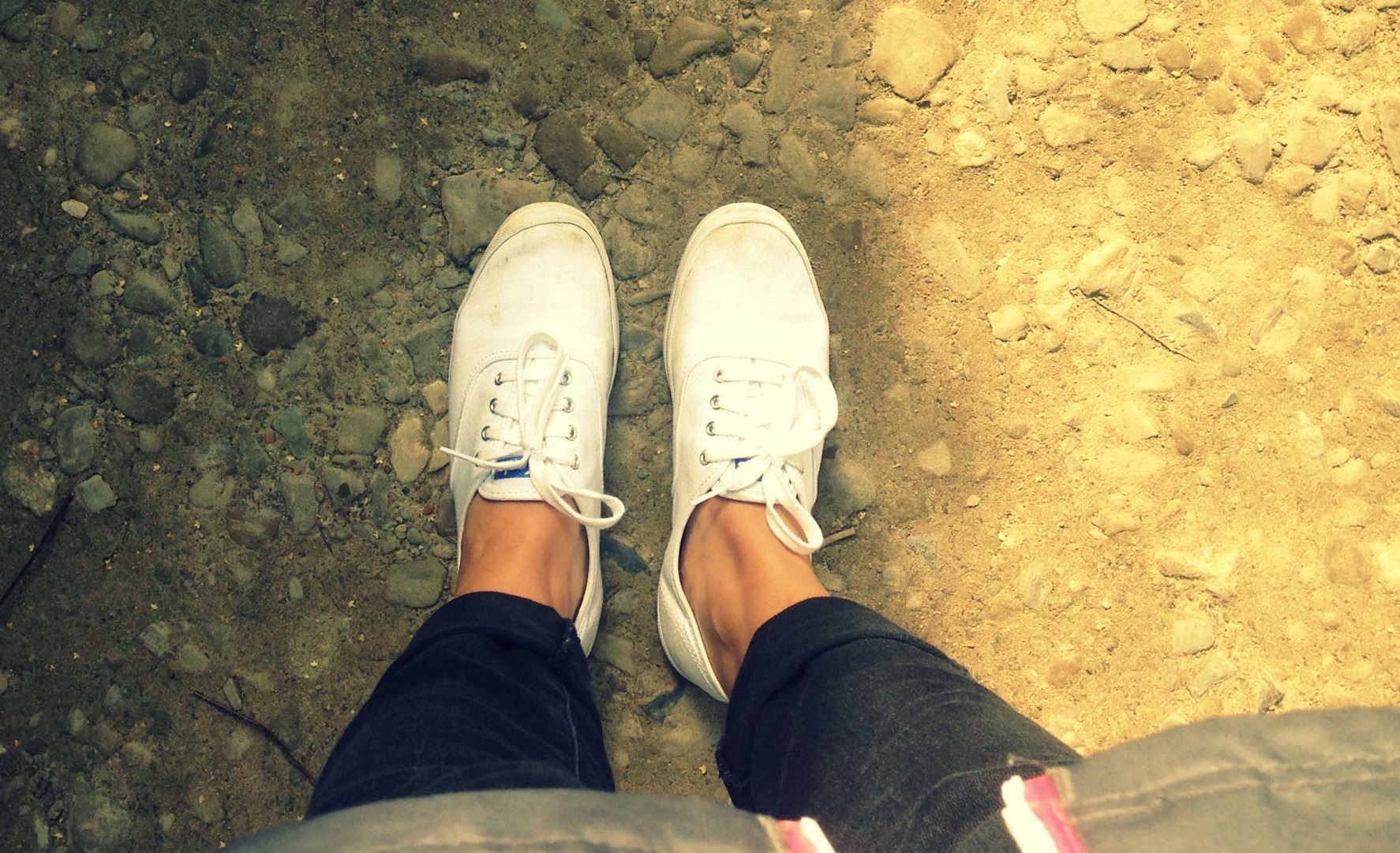
Before walking into Auschwitz I (because there was also Auschwitz II – Birkenau and Auschwitz III – Monowitz), under the notorious “Arbeit Macht Frei,” I took a moment to pause, and stare at the dirt beneath my feet. As odd as it sounds, this was the experience I’d been anticipating the most. My heart still races as I think back to that second of realization that real people, thousands of real, beautiful, soul-filled, devout, faithful people, were forced to walk under this arch of shame, unknowingly towards their death. Thousands of feet never got to choose their path again. As I passed into Auschwitz I, I considered the hours people spent standing, on the ground now under my weight, in hail or snow or sleet or beating down heat while the SS did roll call. The lives that wasted away on that very ground. The hearts broken and crushed in this very dirt. The souls, tormented into wondering whether God yet existed, all while walking on the cursed earth of Auschwitz.
As I wandered the exhibits I started to feel numb. I didn’t know what to think or how to feel anymore. I couldn’t start to imagine the loss or the pain or the mistrust or the panic or the terror or how anybody could find any hope at all in such a horrid, horrid place. In one building pictures of prisoners lined the walls, each picture stating the person’s entry date into the camp and the date they died. Evidence of the Nazi’s original intention to keep track of all that was done, and evidence of lives stolen in their prime. The faces in the photographs silently screamed at me to notice them, and it took great intentionality for me to look into the eyes of those faces – the faces of people who had lived and breathed and quite possibly walked the same halls as I was doing now. I wanted to try and fulfill the impossible task of making them feel noticed, important, loved, valued…
The reality that real people had lived and died here began to settle in after our tour group had walked through a hall filled with long lost possessions of those who’d been murdered at the camp such as hairbrushes, shoes, suitcases, glasses. In the final room there was a small case full of shoe polish – proof people had no idea what kind of fate the camp held in store for them. Lingering over the shoe polish I began to feel something – but not what I expected. Though how is it, you ask, that a case of old shoe polish got to me? One of them was made by the Bata Shoe Company.
“Um…okay? What is that?” I can hear you say.
During WW2 a Czech man by the name of Thomas Bata fled to Canada, with over 100 families, to build, open, and operate a shoe-making company under the same name that he had found success with in the former Czechoslovakia. Bata had foreseen war in 1939 and got out before his company would suffer or be forced into using the shoe factory for more than shoes. He relocated to my home country, aptly naming his new shoe-making village Batawa. Exactly 50 years later I was born, being raised on the road named after the man who is the chief character in this little story. I grew up driving past the Bata Shoe Factory almost every day. So, if you didn’t surmise, the name Bata is something that sparks familiarity inside of me when I see it.
As this container of shoe polish was located on the far right side of the case, and the door was directly to its right, it was the very last thing I saw and was able to absorb before walking out of the Block Building in quite a daze. I, in fact, got a fair ways behind the rest of my tour group. It was then the feeling I hinted at before started to hit me – but it wasn’t the depressing sadness that I thought would simply reveal itself. It was something much, much deeper. I felt the need for love. The longing and need to be loved becomes more overwhelming when we’re face to face with total depravity.
That little container of shoe polish shocked me into remembering that whoever owned that shoe polish, and had carried it with them to what they may have thought to be a hopeful future, belonged to someone. After that shoe polish was taken from them – along with the rest of what they had worked to earn – all they had left was their broken humanity. Really all those people had left was a deep, felt need to be loved.
The need for love is what I felt.
After visiting Dachau I was reminded that I need to stay informed and educated on these events in order to remind myself and those I encounter of the depths of brokenness that humanity lives in. It was people that hurt people; people that broke people; people that stole the dignity from other people. We need to never forget this and together we need to work to ensure this doesn’t happen again. This takes all of us making one decision at a time to see each person we encounter as someone of value. It should take us to our knees in humility to love someone who may seem unlovable.
In the midst of one of the most painful places of life, where silent voices still scream in your ears, I needed to be loved. As I tried to muster up the self talk to remind myself I’m loved by Jesus, I realized how hard that must have been for all of the people who had slept long, cold, hard nights on the bunks I saw or experienced painful, invasive medical treatments of which I heard. In a place so devoid of compassion, would I have known love enough to try and hold on?
I realize no love from any other human being will ever satisfy my deep need for love, and in fact Jesus can and will and does fill that void. But He also makes concessions for relationships that better us and, indeed, help us feel loved and worthy and valuable. I imagine that in the lowest, most horrid, offensive, and heartbreaking moments in history the people involved would have given anything to have known they were loved, to have been held and cherished one more time, to have been kissed passionately in a final moment, to sob uncontrollably in the safety of a big pair of arms wrapped around them.
Auschwitz has reminded me that love is a need. We can help fill that void best when the foundation is already laid in Christ. Thank goodness the Lord has made a way for us to be wrapped up in Him physically by giving us friends, sisters, brothers, spouses, kids, grandparents etc…
When someone knows they’re loved most by Jesus then the genuine love of another person will never be felt empty. Together let’s offer love more freely, give hugs more often (and hold on a little longer, next time), kiss gently and passionately and regularly (and make sure your kids see, if you have kids!), and hold tight specifically to those you’ve been given to love and be loved by.
We all need more love.

 the rambling missionary